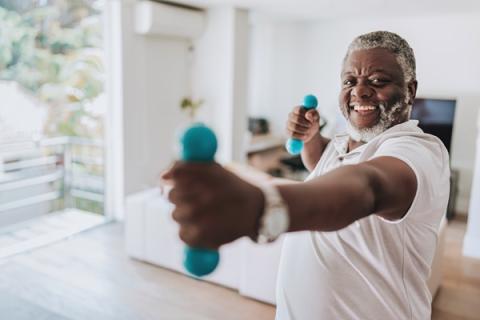
For Resistance Training, Anything Counts!
Forget the influencers and online chatter. Here’s what the science says: You don’t have to do it perfectly. You just have to do it.
In March 2026, the American College of Sports Medicine released its first major update to resistance-training guidelines in 17 years. It is the most comprehensive review of its kind, drawing on 137 reviews and data from more than 30,000 participants. The headline finding was refreshingly simple: Any amount of resistance training improves strength, muscle size, power, and physical function.
“The best resistance training program is the one you’ll actually stick with,” said Stuart Phillips, a professor of kinesiology at McMaster University and one of the authors on the guidelines. “Training all major muscle groups at least twice a week matters far more,” he noted, “than chasing some idea of a ‘perfect’ or complicated program.”
That’s not a consolation prize for people who can’t make it to the gym five days a week. That is the guidance.
You don’t even need a gym
The updated guidelines also recognize that meaningful results don’t require expensive equipment. Elastic bands, bodyweight exercises, and home-based routines all produce clear, measurable improvements in strength, muscle size, and functional performance. The old rigid rules about loads, sets, and rep ranges? No longer supported by the evidence.
What does matter, according to the research, is personal enjoyment, individual goals, and long-term adherence—especially for adults who want to stay strong and functional as they age. The single most meaningful shift anyone can make, the guidelines conclude, is moving from no resistance training to any form of it.
For a lot of people who may be wondering where to start, this is exactly the permission slip they’ve been waiting for.
What consistency gets you
If you need more motivation, consider what staying active over time does for your long-term health. A 2026 Australian study tracking more than 11,000 women across nearly 25 years found that those who consistently met basic physical activity guidelines during middle age had roughly half the risk of dying from any cause compared to women who remained inactive. In real numbers: a death rate of about 5% versus 10%.
The study wasn’t measuring elite athletes or people with perfect workout logs. It was measuring ordinary people who showed up—regularly, over years—and moved their bodies enough to meet the World Health Organization’s recommendation of at least 150 minutes of moderate activity per week. That’s about 20 minutes a day.
None of this means that working harder won’t get you further, or that a structured program has no value. For athletes and highly trained individuals, more specialized approaches still make sense. But for the average person who has been waiting until they can “do it properly,” the evidence says that waiting is the worst thing you can do.
The research is consistent: The gap between doing nothing and doing something is enormous. The gap between doing something imperfectly and doing it perfectly is much smaller than most people think.
At Lutheran Homes, we believe staying active should be accessible, enjoyable, and part of everyday life. That’s why our retirement communities offer a variety of opportunities to move—from strength and fitness activities to walking, group exercise, and other programs designed to keep residents engaged and active at every level. The goal isn’t perfection; it’s finding movement you enjoy and making it part of your routine.
Disclaimer: Always consult a health care provider before beginning any new exercise program.